
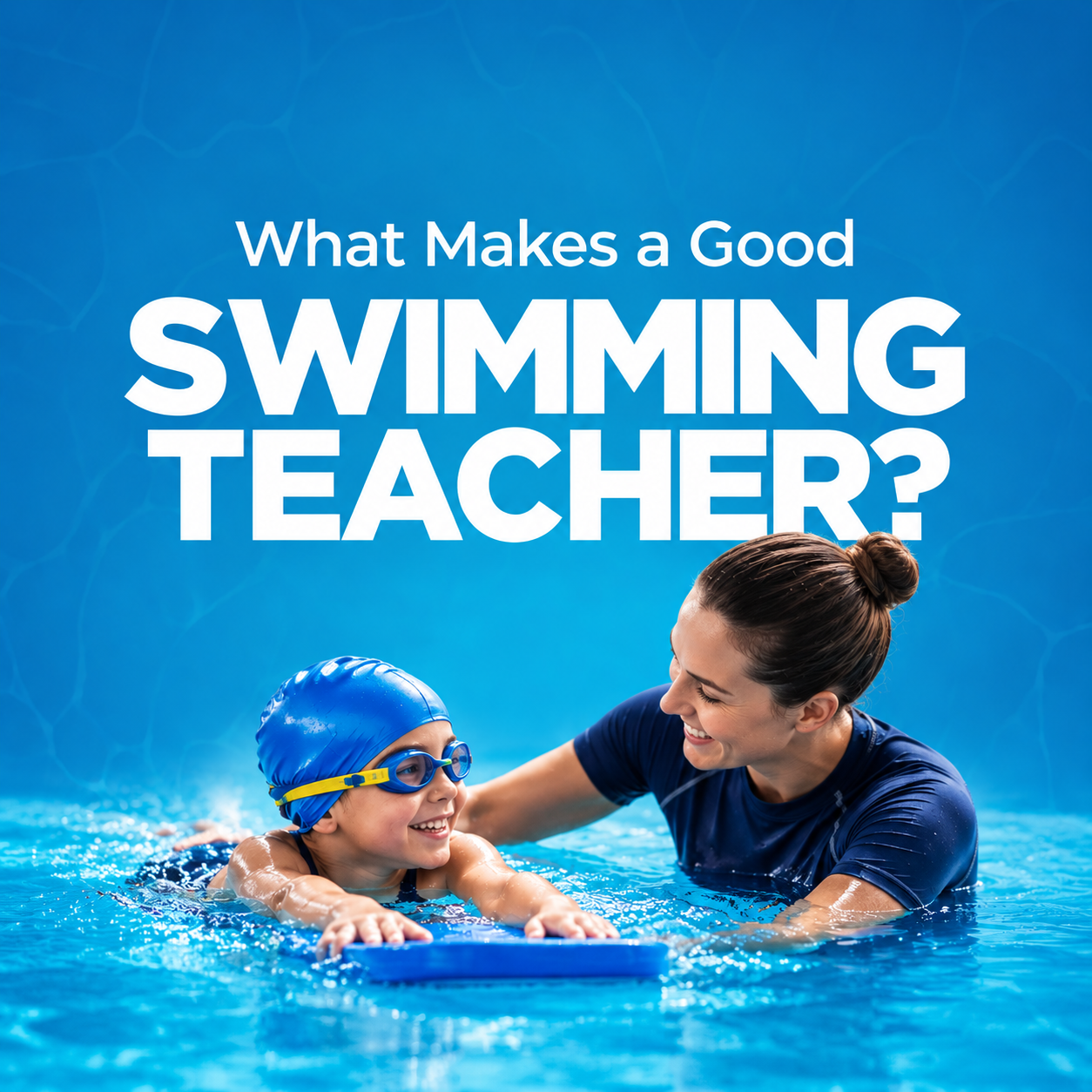
Two swimming lessons can look almost identical on paper. The same pool, the same age group, even the same stated curriculum. Yet the experience for the child can be very different. A good teacher is present, enthusiastic and encouraging, creates an environment children want to be part of, and knows how to help each swimmer progress. Qualifications matter, but they are only one part of effective teaching.
Here are ten qualities worth looking for, whether you’re choosing swimming lessons for the first time or trying to understand what makes a particular teacher a good fit for your child.
A good swimming teacher is actively involved throughout the lesson. They pay attention to what the swimmers are doing, encourage them to keep trying and bring energy to the session. Children are more likely to engage when their teacher is clearly interested in their progress and enjoys teaching them.
Being present also means being responsive. A teacher who is watching closely can recognise when a child has understood something, when they need another explanation or when they are ready to try something more challenging. That level of attention helps children feel supported while they learn.
Children are more likely to progress when they enjoy coming to their swimming lessons. A good teacher creates an environment where swimmers feel comfortable, supported and encouraged to have a go, including when something feels difficult at first. The atmosphere of a lesson can have a significant effect on how children respond to learning.
Over time, those positive experiences can help build a genuine love for swimming. The aim is to develop capable swimmers while making the pool a place children want to return to, rather than something they simply attend because they have to.
A child needs instructions they can understand and use while they are actually swimming, rather than a technical explanation that makes sense mainly to an adult on the poolside. Good teachers use age-appropriate language, clear demonstrations and simple corrections that give the swimmer something practical to work on.
Communication also means knowing when to change the explanation. If a child does not understand an instruction the first time, repeating exactly the same words may not help. A good teacher can explain, demonstrate or approach the skill differently so the child has a better chance of understanding it.
Good teaching starts with noticing what is actually happening in the water. A teacher needs to observe details such as body position, breathing, balance, kicking, timing and coordination before deciding what needs to change. Close observation allows feedback to be based on the swimmer in front of them rather than a generic correction.
The feedback then needs to be clear without overwhelming the child. Giving too many corrections at once can make a swimmer unsure of what they are supposed to focus on. A good teacher knows which adjustment is most useful at that moment, gives the swimmer a chance to apply it and builds from there.
Learning swimming technique is only one part of becoming a capable swimmer. Good lessons should also develop water skills and water safety, with new learning building on the skills children have already developed. This creates a more complete understanding of how to move through and behave around water.
As swimmers progress, lessons should continue to develop these different areas rather than treating them as separate subjects. Stroke technique, water confidence, practical skills and safe decision-making all have a place in swimming education, with the emphasis developing as the child becomes more capable.
Children do not all learn new skills at the same pace, and they do not all respond to instruction in the same way. A good teacher adapts to the children in front of them, changing the explanation, activity or pace when something is not working. Patience gives children the time they need without allowing the lesson to lose direction.
Being adaptable does not mean lowering standards. Children should still be encouraged to develop and improve, with expectations appropriate to their ability and stage. The teacher’s role is to find the right way to help each swimmer reach the next step rather than expecting every child to get there in exactly the same way.
Safety should remain central to every swimming lesson. Children need to develop an understanding of how to behave safely in and around water alongside their physical swimming skills. A good teacher keeps those considerations present throughout the lesson without allowing safety to become disconnected from the rest of the learning.
At the same time, children need lessons that hold their attention and encourage them to keep progressing. Good teachers balance appropriate challenge with careful supervision, giving swimmers opportunities to practise, improve and try new skills while maintaining a safe environment.
A group of children can be working towards the same level while having very different needs. One swimmer may need more encouragement to attempt something new, while another may benefit from being challenged further. A good teacher notices these differences and considers how each child best fits within the group.
That individual understanding also helps the teacher decide how to support each swimmer without losing the benefits of learning as part of a group. The goal is to make sure children are appropriately challenged, supported and included, rather than expecting every swimmer to respond to the same approach.
Parents should be able to trust that their child’s teacher will give them an honest picture of how they are progressing. Good communication includes being clear about what a swimmer is doing well, where they still need to develop and what they are working towards next.
That relationship matters because progress does not only happen during the lesson. When teachers and parents understand what a child is working on, they can support the swimmer consistently and make better decisions about their development. Honest feedback also gives parents a clearer idea of what progress actually looks like.
Qualifications and recognised training provide an important foundation for good swimming teaching. They show that a teacher has completed appropriate training and met defined requirements for the role, so they are worth checking when choosing swimming lessons for your child.
But qualifications are only one part of what makes a good teacher. Parents should also look at how that training translates into the lesson itself: whether the teacher is engaged, communicates clearly, observes swimmers closely, keeps children safe and adapts their approach to the individuals they are teaching.
This is the approach we build our lessons around at WCSA. Our teachers are present and actively involved in the water, creating an environment where children can learn, enjoy swimming and make steady progress. Classes are kept small enough for teachers to observe swimmers closely and adapt their approach to the children in front of them, while our structured programme develops technique, water skills and water safety together.
Our teachers also hold STA accreditation, providing an important foundation for their instruction. From there, we focus on how that knowledge is applied in every lesson: giving children clear feedback, encouraging them to progress, maintaining appropriate standards and helping each swimmer develop as an individual within the group.
Clear communication, close observation, useful feedback, patience and adaptability all matter, alongside recognised qualifications and appropriate training.
Being in the water allows a teacher to observe technique at close range and make corrections while the swimmer is actually practising the skill.
Recognised accreditation, such as STA qualifications, provides an important baseline. Parents can then look at how the teacher communicates, observes and works with children during lessons.
A good teacher recognises hesitation, builds skills progressively and keeps safety central while giving the child time to become comfortable with each step.
Watching a lesson can tell you a lot. Look for specific feedback, close observation, clear instructions and a teacher who is actively engaged with the swimmers throughout the session.
Choosing swimming lessons means choosing the person teaching your child.
At WCSA, our swimming instructors Hertfordshire work in the water with swimmers, allowing them to observe technique closely, make corrections and give feedback as the lesson happens.
Explore swimming lessons in Hertfordshire and see how our classes work.