Your child’s first swimming lesson is an exciting milestone—but it can also feel a little overwhelming for both parents and kids. Knowing what to expect can make the experience smoother, calmer, and more enjoyable
A Warm & Friendly Introduction
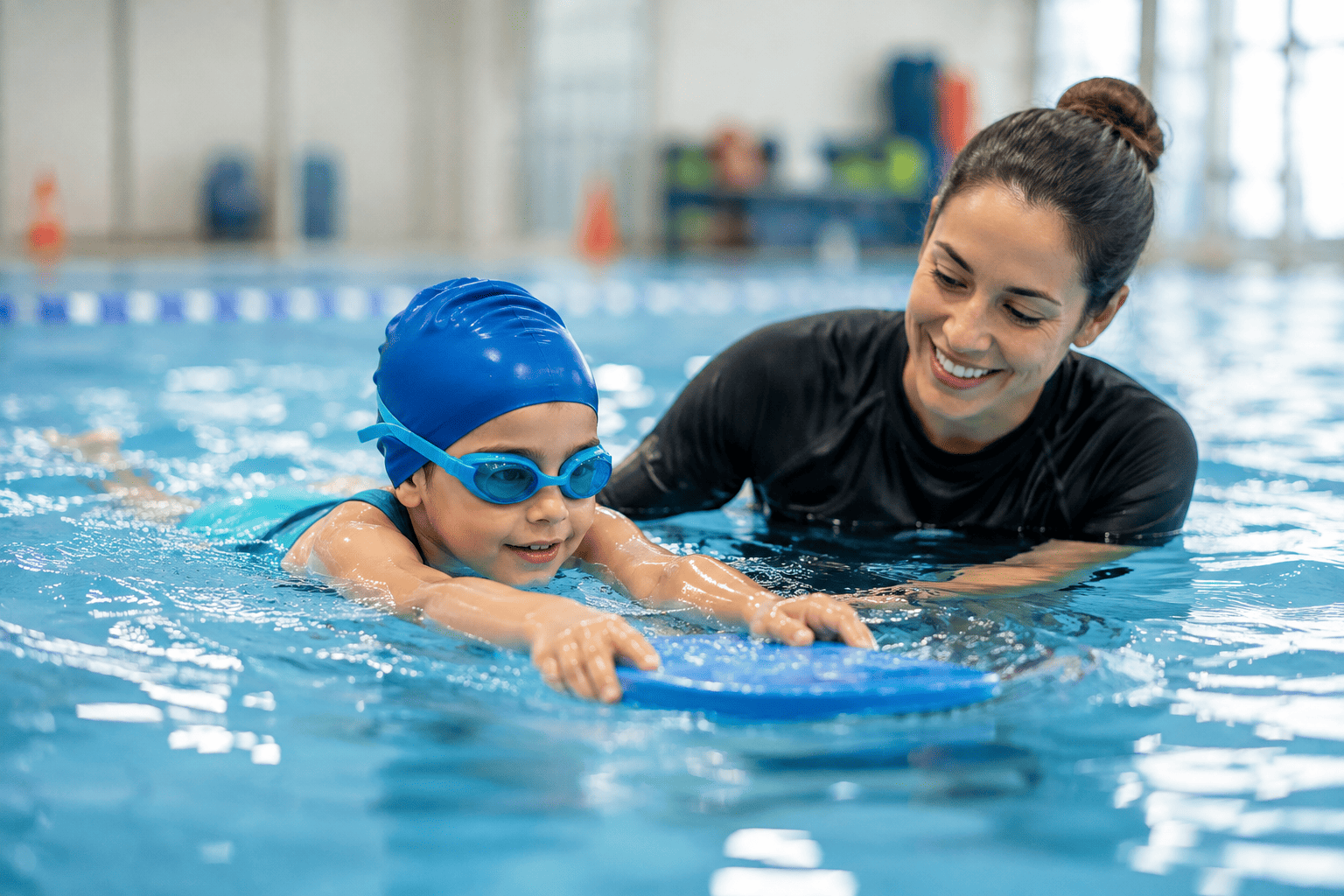
Most swim classes begin with a gentle and welcoming approach. Coaches focus on helping children feel safe and comfortable rather than rushing into techniques.
What usually happens:
- Introduction to the instructor
- Getting familiar with the pool environment
- Light water play activities
Goal: Build trust and comfort before learning skills.
Water Comfort Comes First
Before learning how to swim, children are encouraged to simply get used to being in the water.
Activities may include:
- Splashing water on the face
- Sitting at the pool edge
- Slowly entering the pool
This step is crucial to reduce fear and build early confidence.
Parent Participation (If Required)
For younger children, especially beginners or toddlers, parents may be asked to join the session.
Why this helps:
- Provides emotional reassurance
- Makes the child feel safe
- Speeds up adaptation to water
Over time, instructors gradually encourage independence.
Basic Breathing & Floating
Children are introduced to foundational skills that prepare them for actual swimming.
Early skills include:
- Blowing bubbles in water
- Holding breath briefly
- Assisted floating (front and back)
These basics are essential for developing control and balance.
Focus on Fun, Not Perfection
The first lesson is designed to be fun and engaging—not strict or technical.
Expect:
- Games and playful exercises
- Songs or group activities
- Encouragement and positive reinforcement
This creates a strong, positive association with water.
Short & Structured Sessions
Swimming lessons are designed to match a child’s attention span.
Typical structure:
- 30–45 minute sessions
- Multiple short activities
- Frequent breaks or transitions
This keeps children engaged without overwhelming them.